
How the most pop Wiccan priestess in history made occultism cool
Seeing her today — French twist, refined posh accent, metallic pink nails — it’s hard to imagine that this nearly eighty-year-old English lady with aristocratic manners is indeed Maxine Sanders: the Witch Queen of Alexandrian Wicca, the high priestess adored by television and British tabloids, the most recognisable face of the occult sciences in 1960s and 70s England.
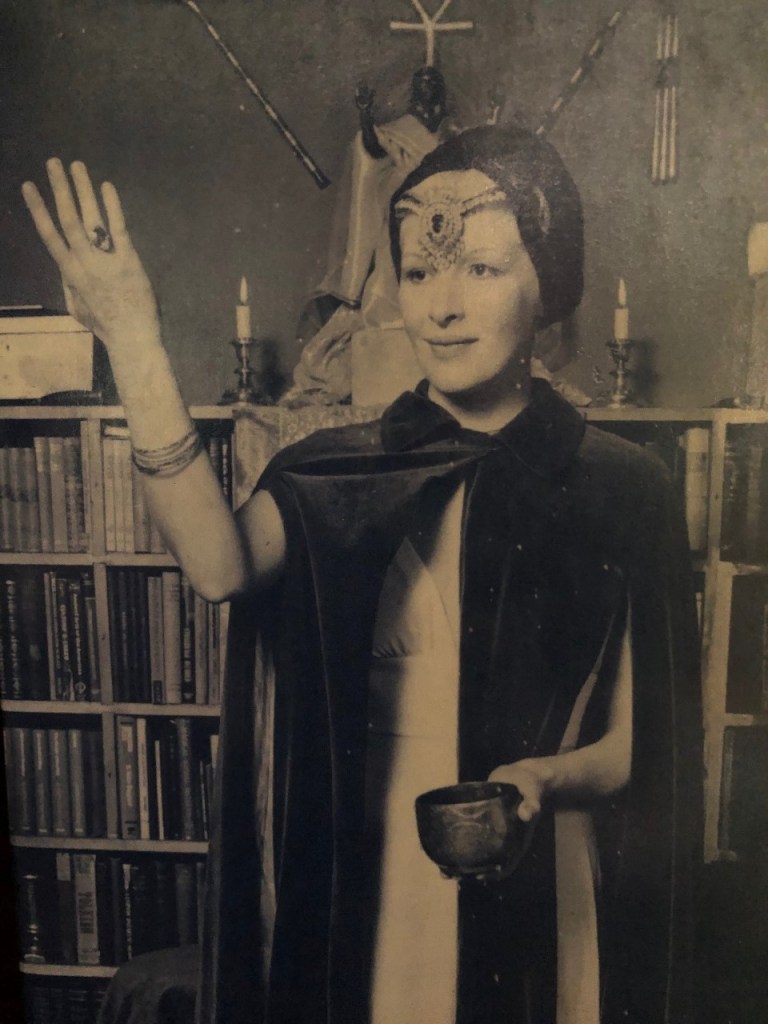
Sophisticated and temperamental like an old Hollywood diva, Maxine effortlessly blends earthly frivolity with otherworldly grandeur. She recounts spicy anecdotes with a cunning, cosmopolitan smile — like the time she ended up almost completely naked at an afterparty hosted by film director Malcolm Leigh, when one of the threads of her crocheted purple dress began to unravel — or criticises the scruffy look of some modern witches with a sharp «we’re not hikers». Her words brim with wisdom, wit, and love for the Craft — as wicca is called among initiates — but also a deep understanding of the importance of image.

Not coincidentally, Maxine and her husband — Alex Sanders, founder of Alexandrian Wicca and its namesake — created a media machine never before seen among practitioners of the occult. Born Arline Maxine Morris on the 30th December 1946 in Cheshire, Maxine had no idea what life would bring when her mother, who also dabbled in the esoteric, invited her old friend Alex Sanders, over for tea. From that meeting, an unbreakable bond was born — both romantic and magical — despite their 20-year age gap. They were married first in 1965 through a handfasting ritual — a magical hand-binding ceremony — and then civilly in 1968.
The couple moved to London, where they founded the first Alexandrian coven and had two children. Maxine, who had been consecrated as Third Degree Witch Queen by Sanders, played a significant role in initiating new adepts. In 1971 they bought a house in Sussex, living between London and the countryside; but just a year later, Maxine decided to end her collaboration with Sanders and the two separated. Nevertheless, they remained in close contact until his death in 1988. She returned to London, where she founded a new coven called The Temple of the Mother, active until the 1980s and focused primarily on healing and benevolent rituals. She published two autobiographies: Maxine The Witch Queen in 1976 and Fire Child: The Life & Magic of Maxine Sanders ‘Witch Queen’ in 2008.
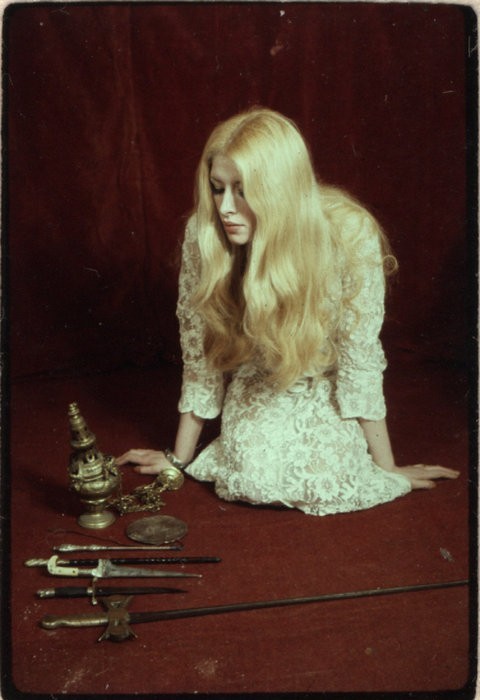
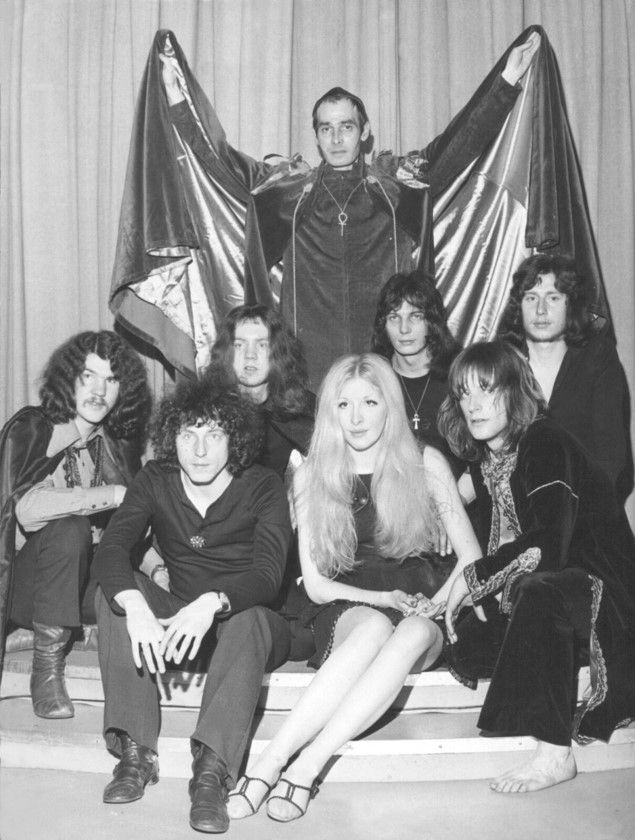
Thanks to their dedication to documentation, we have countless snapshots and film stills of Wiccan rituals. In one of the most well-known to the public, Maxine stands at the center in a perfectly composed pose, surrounded by daggers, trays, censers and chalices. Her long blonde hair, the white lace robe, the burgundy velvet backdrops, the silvery gleam of magical objects, and the soft pastel tones — the Sanderses, like true art directors, used all these elements to evoke the mysterious and ancient allure of early color photography. We also find ambiguous black-and- white portraits, firelight flickering over Maxine’s sharp, naked body, initiates dancing in a circle, ritual orgies, Maxine alongside the rock band Black Widow…
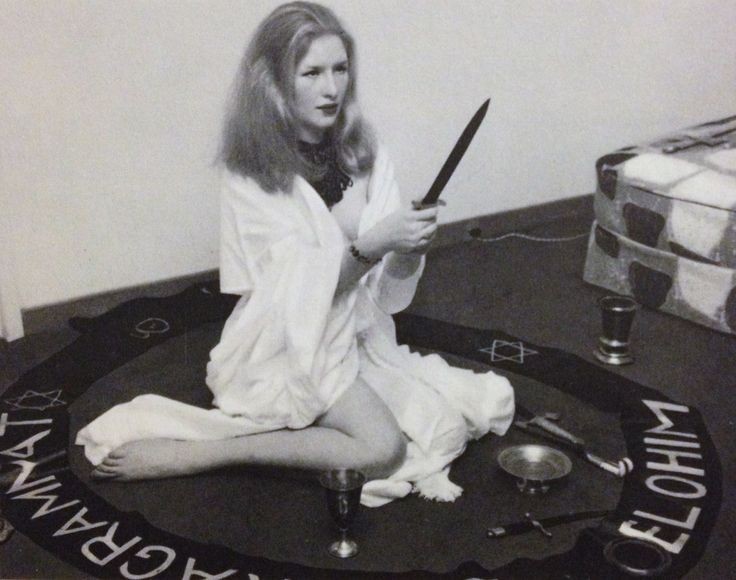
These images, whose evocative power pull us in and spark curiosity, are woven into a complex network of references, tributes, and legacies: the Pre-Raphaelites, Victorian Gothic, 19th-century psychic séances, Picnic at Hanging Rock, Thea Porter’s ethereal medieval-inspired fashions, Catherine Deneuve in Peau d’Âne, or Marianne Faithfull’s cover of Scarborough Fair — all weave together into a kind of hall-of-mirrors reflection of their time.
The reasons for Alexandrian Wicca’s success lie precisely in the Sanderses’ ability to read the sociocultural moment, tapping into the rising collective imagination of 1960s and 70s Britain, as the country slowly came out from post-war conservative gloom. The capital, soon to be known as Swinging London, awakened and attracted a vibrant community of musicians, artists, writers, and designers who helped create a local scene that would forever change the underground culture. From this unique convergence came the Rolling Stones, Mary Quant with her miniskirt, Bailey’s black-and-white shots, and Michelangelo Antonioni’s iconic film Blow-Up.

Interest in esoteric practices had been resurging in England since the early 20th century. In 1951, witchcraft was officially decriminalised, allowing occultist movements to expand significantly. The 1960s brought a reinterpretation of British folklore and neopaganism, marking the unstoppable rise of magical arts. These were embraced by a population eager for new forms of spirituality, social connection, and bodily liberation. It was during this era that Alex Sanders founded Alexandrian Wicca, based on the widely practiced Gardnerian Wicca. His doctrine was more open, incorporating elements from other religions and mystical practices, and emphasised proselytising — a stark contrast to the secrecy traditionally associated with the arcane.
In a historical moment when communication strategies were becoming increasingly driven by advertising language and visual impact, the Sanderses immediately grasped the importance of public exposure in spreading their practice. They gave numerous press interviews, appeared nude under moonlight in tabloids. Many scholars referenced them in anthologies, like Stewart Farrar did in his occult classic What Witches Do. They featured in several documentaries — Legend of the Witches (1970), Witchcraft ’70 (1970), Secret Rites (1971), and The Power of the Witch (1971) — films often categorised as witchploitation (a blend of “witch” and “exploitation”), which were a massive success in the UK due to their overtly erotic content.

Maxine was the perfect vehicle to embody this new Wiccan tradition — modern and in tune with the times. Her supernatural beauty and flair for performance were fundamental in defining the Alexandrian Wiccan aesthetic. Fashion, unsurprisingly, was one of the key mediums through which its doctrine spread. Maxine has often commented on how her husband was truly passionate about tailoring, often working late into the night making garments for their ceremonies.
But all that glitters is not gold. Various sources claim that what was expected of Maxine was simply to «sit there in all her perfection» to «represent the Goddess». The story of this Catholic girl turned Witch Queen is also the story of many women who, during those turbulent decades, tried to break free from the rigid gender roles imposed by a conservative and puritanical society — only to find themselves reduced to decorative figures. It’s also the tale of a double emancipation: first from an oppressive social order, then from an equally stifling male dominance. Maxine’s life certainly didn’t end with the divorce. Her magical practice continued for decades, evolving into an almost institutional force—a maternal authority, full of strength— for all those initiated into the occult.
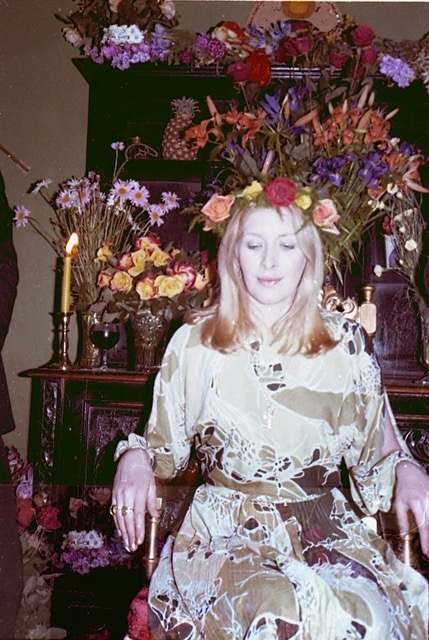
Sanders, who a few years after her separation from her husband had herself immortalised on the cover of her autobiography wearing a 1970s red satin dress, a metallic headpiece, and holding a long sword — a contemporary Circe just out of Studio 54. Sanders, who, when asked about the best advice she’d ever received in the Craft, responded with natural authority and graceful ease: «Enjoy — enjoy everything». Sanders, who rode the wave of Counterculture like no other without ever slipping into banality, and who still embodies that magnetic hybrid of rockstar bohemianism and the sacred aura of a high priestess. The Witch Queen continues to enchant anyone who dares to enter her world — rich, complex, and irreducibly free. And we surrender, gladly, to her spell.

Maxine Sanders: la regina strega dello Swinging London
Come la sacerdotessa wiccana più pop della storia rese cool l’occultismo
Vedendola oggi — lo chignon francese, l’accento posh misurato, le unghie di un rosa metallico — risulta difficile immaginare che questa dama inglese quasi ottantenne dalle maniere aristocratiche, sia davvero Maxine Sanders: la Strega Regina della Wicca alexandriana, la sacerdotessa prediletta dalla televisione e dai tabloid britannici, il volto più visibile delle scienze occulte nell’Inghilterra degli anni ’60 e ’70.
Sofisticata e capricciosa come una vecchia diva, Maxine riesce a combinare la frivolezza mondana con la magnificenza ultraterrena. Racconta aneddoti piccanti con un mezzo sorriso malizioso da donna di mondo — ad esempio, come rimase quasi completamente nuda a un after party del regista Malcolm Leigh, quando uno dei fili del vestito viola all’uncinetto che indossava iniziò a srotolarsi — o censura l’aspetto trascurato di alcune streghe odierne con un netto «we’re not hikers», “non siamo escursionisti”. Le sue parole trasudano saggezza, ironia e amore per “L’Arte” — “The Craft”, come viene chiamata tra gli iniziati nel mondo anglosassone — ma anche una forte consapevolezza dell’importanza dell’immagine.
Non a caso, Maxine creò insieme al marito — Alex Sanders, fondatore della Wicca alexandriana a cui diede il nome — una macchina di propaganda mai vista prima tra i praticanti delle scienze occulte. Nata Arline Maxine Morris il 30 dicembre 1946 in Cheshire, Maxine era completamente ignara di tutto ciò che la vita le avrebbe riservato quando la madre, anch’essa interessata all’esoterismo, invitò Alex Sanders, un suo vecchio amico, a prendere il tè. Da quell’incontro in poi, si stabilì tra i due un sodalizio affettivo e magico indissolubile, nonostante la differenza di età di vent’anni. Si sposarono, prima nel 1965 mediante un rituale di handfasting o legame magico delle mani degli sposi, e successivamente, nel 1968, con rito civile.
La coppia si trasferì a Londra, dove fondarono la prima congrega alexandriana ed ebbero due figli. Maxine, che era stata consacrata come Regina Strega di Terzo Grado da Sanders, fu responsabile in grande misura dell’iniziazione di nuovi adepti. Dal 1971 comprarono una casa nel Sussex, vivendo tra Londra e la campagna; ma, appena un anno dopo, Maxine decise di interrompere la sua collaborazione con Sanders e i due si separarono. Ciononostante, rimasero a stretto contatto fino alla morte di lui nel 1988. Lei tornò a Londra, dove fondò un’altra congrega chiamata The Temple of the Mother, attiva fino agli anni ’80 e fondamentalmente incentrata sui rituali benefici e di guarigione. Pubblicò due autobiografie: Maxine The Witch Queen nel 1976 e Fire Child: The Life & Magic of Maxine Sanders ‘witch Queen’ nel 2007
Grazie al loro impegno documentale, ci sono rimaste miriadi di istantanee e di fotogrammi dei rituali wiccan. In uno di essi, probabilmente il più noto al grande pubblico, troviamo Maxine al centro, in una posa perfettamente calcolata, avvolta da daghe, vassoi, turiboli e calici. I capelli lunghi e biondi, la tunica di pizzo bianco, gli sfondi di velluto bordeaux, il riflesso argentato degli oggetti magici, i colori cipriati — I Sanders, come veri e propri art director, si servivano di tutti questi elementi per riprodurre l’effetto misterioso e atavico delle prime fotografie a colori. Troviamo anche ritratti ambigui in bianco e nero, la luce del fuoco sul corpo nudo e tagliente di Maxine, gli iniziati che formano un cerchio e danzano, le orge rituali, Maxine insieme alla rock band Black Widow.
Queste immagini, il cui potenziale evocativo ci attrae e ci incuriosisce, si inseriscono in un complesso palinsesto di collegamenti, omaggi e lasciti: i preraffaelliti, il Victorian Gothic, le sedute spiritiche ottocentesche, Picnic at Hanging Rock, le creazioni vaporose d’ispirazione medievale di Thea Porter, Catherine Deneuve in Peau d’Âne o la cover di “Scarborough Fair” di Marianne Faithfull si intrecciano in una sorta di gioco di specchi, testimone del loro tempo.
I motivi dietro il successo della Wicca alexandriana risiedono precisamente nella capacità dei coniugi Sanders di leggere le coordinate socioculturali del momento, entrando in sintonia con il nuovo immaginario che si faceva strada nel Regno Unito degli anni ’60 e ’70, in un periodo in cui il paese usciva lentamente dal grigiore conservatore del dopoguerra. La capitale britannica, che in quel decennio sarebbe stata conosciuta come Swinging London, si risvegliava, attirando una folta comunità di musicisti, artisti, scrittori e designer che contribuirono alla creazione di una scena locale che cambiò per sempre la cultura underground. Da questa particolare congiuntura emersero i Rolling Stones, Mary Quant con la sua minigonna, gli scatti in bianco e nero di David Bailey e film del livello di Blow-Up di Michelangelo Antonioni.
Già dall’inizio del Ventesimo secolo, in Inghilterra si riscontrava un rinnovato interesse per le pratiche esoteriche. Nel 1951, la stregoneria fu definitivamente depenalizzata, permettendo ai movimenti occultisti di espandersi significativamente. L’avvento degli anni ’60, con la sua reinterpretazione del folklore britannico e del neopaganesimo, segnò l’ascesa inarrestabile delle arti magiche, accolte positivamente da una popolazione desiderosa di nuove forme di spiritualità, condivisione sociale e liberazione del corpo. Fu in questi anni che la Wicca alexandriana fu fondata da Alex Sanders, basandosi sui principi della Wicca gardneriana, estremamente diffusa in Gran Bretagna in quel periodo. La dottrina proposta da Sanders era più aperta, incorporava elementi di altri culti religiosi e pratiche mistiche, e attribuiva particolare importanza al proselitismo, in una netta opposizione alla segretezza che aveva caratterizzato tradizionalmente le tradizioni arcane.
In un contesto storico in cui le strategie di comunicazione diventavano sempre più orientate al linguaggio pubblicitario e l’aspetto visivo assumeva un peso crescente, i Sanders compresero subito l’importanza dell’esposizione pubblica per la diffusione della loro pratica. Rilasciarono numerose interviste ai giornali, apparvero nudi sotto la luce della luna sulle pagine dei tabloid. Molti studiosi li citarono nelle loro opere antologiche, come fece Stewart Farrar nel classico dell’occultismo What Witches Do. Furono protagonisti di diversi documentari, — Legend of the Witches (1970), Witchcraft ’70 (1970), Secret Rites (1971) e The Power of the Witch (1971), film che di solito vengono classificati come apparteneti al genere della witchploitation (un gioco di parole tra “witch” e “exploitation”), e che ebbero un enorme successo nel Regno Unito per il loro contenuto apertamente erotico.
Maxine rappresentava un veicolo ideale per trasmettere lo spirito di questa nuova tradizione wiccan, moderna e al passo con i tempi. La sua bellezza soprannaturale e il suo spiccato senso della performatività furono fondamentali nella definizione dell’immaginario della tradizione alexandriana. Non a caso, la moda fu uno dei canali fondamentali di trasmissione della dottrina wiccan. Maxine Sanders ha commentato in più occasioni come suo marito fosse un autentico passionato dei lavori di sartoria, arrivando a lavorare fino a notte fonda nella confezioni di abiti da utilizzare nelle loro cerimonie. Le creazioni di Alex Sanders erano moderne, fluide, perfette per avvolgere il corpo snello ed elegante di sua moglie.
Ma non è oro tutto quel che luccica. Diverse fonti affermano che quello che si aspettava di Maxine era semplicemente che si «sedesse lì in tutta la sua perfezione» per «rappresentare la Dea». La storia di questa ragazza cattolica diventata Strega Regina è la storia di tante donne che, in quei decenni turbolenti, tentarono di liberarsi dai rigidi ruoli di genere imposti da una società conservatrice e bigotta — solo per ritrovarsi relegate al ruolo accessorio di ragazze immagine. È anche la cronaca di una doppia emancipazione: prima da un ordine sociale oppressivo, poi da un maschilismo ugualmente soffocante. La vita di Maxine non finì certamente con il divorzio. La sua attività magica si è protratta per tutti questi decenni ed è diventata quasi un’istituzione —una autorità materna e piena di forza — per tutti gli iniziati all’occultismo.
Sanders, che pochi anni dopo la separazione dal marito si fece immortalare sulla copertina della sua autobiografia con un abito in satin rosso anni ’70, un copricapo metallico e una lunga spada — una Circe contemporanea appena uscita da Studio 54. Sanders, che con autorevolezza naturale e grazia innata rispondeva alla domanda su quale fosse stato il miglior consiglio ricevuto nell’Arte: «godere, godere di tutto». Sanders, che ha saputo cavalcare come nessun’altra l’onda della Controcultura senza mai scivolare nella banalità, e che ancora oggi incarna l’ibrido magnetico tra lo spirito bohémien da rockstar e l’aura ieratica di una somma sacerdotessa. La Regina Strega continua ad affascinare chiunque osi entrare nel suo universo, ricco, complesso, e irriducibilmente libero. E noi ci abbandoniamo, felici, al suo incantesimo.
https://www.anothermag.com/fashion-beauty/7333/lessons-we-can-learn-from-maxine-sanders
https://www.agenteprovocador.es/publicaciones/el-ciudadano-kane-del-mundo-oculto
watch?v=3hWiBSjcvFM https://thewitchesalmanac.com/pages/maxine-sanders
Museum of Witchcraft’s Simon Costin interviews Maxine Sanders https://www.youtube.com/
ARTICLE & TRANSLATION BY
Marta Rey Villena
 Pigiama Magazine ☾