
Nel vasto panorama dell’esoterismo e della spiritualità esiste un concetto di entità misteriose che si muovono al confine di ciò che si può e non si riesce a toccare, alimentandosi dall’intento e dall’emozione di quelli che le evocano, gli egregori e i vampiri energetici. Queste entità non fanno parte di mondi ultraterreni, ma si generano dalla mente umana stessa.
Ogni comunità può generare un’entità invisibile, ma percettibile nei suoi effetti. Quando pensieri, emozioni e intenzioni si uniscono in modo collettivo e persistente, possono generare forme-pensiero così intense da acquisire “vita propria”. La parola “egregori” deriva dal greco egrégoroi, che significa “osservatori” o “guardiani”. Già in antichi testi apocrifi, come il Libro di Enoch, venivano descritti come spiriti o angeli caduti che vigilavano sull’umanità. Con il passare del tempo, il termine ha assunto un significato più legato al mondo dell’occulto e al pensiero magico.
Un egregore nasce dal cuore pulsante di un pensiero condiviso, influenzando o intralciano il cammino tracciato dai creatori. Possono essere simboli e ideali dove bandiere, loghi, emblemi o ideologie possono diventare punti di riferimento che concentrano energia e sono capaci di vivere e crescere attraverso la partecipazione collettiva. Si può trattare di gruppi esoterici o massonici, nei quali la pratica di rituali e meditazioni di gruppo alimenta un egregore specifico; oppure religioni e culti, formati dalla fede di milioni di credenti che creano una potente energia.
Tuttavia alcune tradizioni esoteriche moderne non vedono più l’egregore come una semplice entità divina, ma come manifestazioni nate dal tessuto della mente umana. Dal punto di vista della psicologia sociale questo fenomeno viene visto come un’insieme di norme condivise ed emozioni amplificate, dove si creano campi di energia che trascendono le singole persone. Le neuroscienze, a loro volta, suggeriscono che fenomeni come l’empatia e la sincronizzazione dei neuroni possano favorire questa connessione unificante, lasciando emergere una percezione quasi autonoma del pensiero collettivo.
Gli egregori più forti nascono dove si uniscono milioni di persone, in cui ogni rituale aggiunge uno strato di energia ad una struttura che sembra crescere oltre i suoi creatori. La crescita, però, non è neutrale. Fortificandosi, può creare un’influenza in grado di modellare comportamenti, pensieri ed emozioni in armonia con la sua natura originaria. Alcuni egregori si formano attraverso profonde sensazioni di amore e unità, rivelandosi luminose e compassionevoli.
Altre, invece, sorgono da sentimenti legati all’odio, alla paura o alla sete di controllo, alimentando ideologie o movimenti oppressivi e facendo uso di simboli sinistri. Gli egregori oscuri si formano là dove l’umanità ha smesso di guardarsi dentro: si nutrono di ciò che non viene elaborato, represso oppure dimenticato. Rappresenta il momento in cui la collettività si allontana dalla sua essenza spirituale, trovano terreno fertile per queste entità.
Rudolf Steiner, fondatore dell’antroposofia, parlava di esseri spirituali ostili che si nutrono delle emozioni e pensieri negativi, incontrollati e non purificati dell’uomo. Secondo lui, oltre al mondo visibile, esiste un mondo invisibile popolato da entità spirituali che influenzano la vita umana, alcune in modo positivo altre in modo ostile. Tra queste forze ostili ne identifica due gruppi principali: gli Arimanei e gli Asura.
Gli Arimanei sono entità che spingono l’essere umano a credere solo nella materia, nella tecnologia, nel potere e nel controllo. Vogliono che ci dimentichiamo della nostra parte spirituale, creando un senso di separazione dagli altri e dalla natura. Gli viene data loro energia quando l’essere umano si fa alimentare e dominare dalla paura, dal cinismo o dall’ossessione per il successo materiale.
Gli Asura secondi, invece, sono ancora più distruttivi: cercano di spezzare la nostra coscienza e di farci perdere il senso di chi siamo, nutrendosi dei nostri pensieri confusi, emozioni incontrollate e ferite interiori non guarite. Queste forze però sono molto meno invisibili di quello che crediamo, infatti si manifestano nei nostri comportamenti, nei pensieri che ci tormentano e nei momenti in cui ci sentiamo svuotati, bloccati o tendiamo all’isolamento.
Nelle tradizioni sciamaniche e nell’occultismo occidentale, invece, si parla di larve astrali o elementali negativi: entità generate da pensieri ripetitivi e emozioni non elaborate che, fuori controllo, diventano dei veri e propri parassiti della mente.
Sono forme-pensiero autonome nate da emozioni intense e persistenti che si attaccano al campo energetico umano, provocando stanchezza, confusione mentale, incubi, e in alcuni casi, malattie psicosomatiche.
Se le larve astrali rappresentano il risultato di un conflitto interiore, si trovano poi i vampiri energetici, laddove vengono incarnate dinamiche più esterne e relazionali. Rappresentano ricami con motivi distorti che vengono tessuti sul nostro campo energetico, impedendo luce e chiarezza. Non vivono solo nel mondo sottile, ma abitano inconsciamente le conversazioni, i silenzi e le manipolazioni emotive.
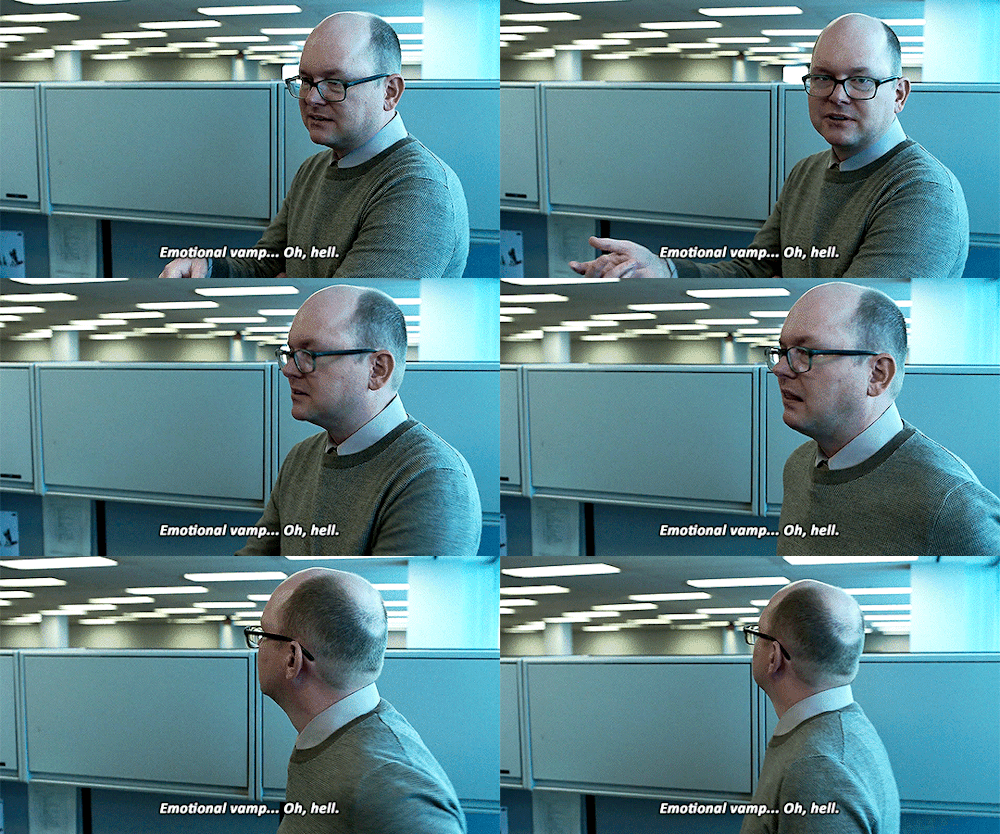
Nel linguaggio esoterico, il termine vampiro energetico non indica una creatura mitologica, ma una figura spesso umana, talvolta simbolica, che si nutre dell’energia vitale altrui.
Il vampiro energetico non sempre è consapevole del suo ruolo: spesso è una persona ferita, carente di equilibrio interiore, che cerca inconsciamente di compensare il proprio vuoto drenando la vitalità degli altri. Secondo Albert Bernstein, il vampiro energetico può manifestarsi sotto forma di diverse personalità: figure che seducono con brillantezza ma non sanno amare, altre che piangono perennemente senza voler guarire, oppure che giocano silenziosamente con i sensi di colpa di chi ne viene in contatto sia emotivamente, che energicamente.
E così, in questa danza apparentemente silenziosa di forze visibili e invisibili, l’essere umano resta il vero artefice: ogni relazione, pensiero ed emozione consapevole può diventare il filo resistente che va a ricucire una trama distorta, permettendoci di creare nuovamente un disegno armonico.
Egregors and energy vampires, the dark power of thought forms
In the vast landscape of esotericism and spirituality, there exists a concept of mysterious entities that move along the boundary between what can and cannot be touched, feeding on the intent and emotion of those who invoke them: the egregores. These entities do not belong to otherworldly realms but are generated by the human mind itself.
Every community can generate an invisible entity, perceptible through its effects.When thoughts, emotions, and intentions unite in a collective and persistent way, they can create thought-forms so intense that they acquire a “life of their own.” The word “egregore” derives from the Greek egrégoroi, meaning “watchers” or “guardians.” In ancient apocryphal texts, such as the Book of Enoch, they were described as spirits or fallen angels who watched over humanity.
Over time, the term took on a meaning more closely tied to the occult and magical thinking. An egregore is born from the pulsing heart of a shared thought, influencing or obstructing the path laid out by its creators. They can be symbols and ideal, flags, logos, emblems, or ideologies, that become focal points of energy and are capable of living and growing through collective participation. These may include esoteric or Masonic groups, where the practice of rituals and group meditations nourishes a specific egregore; or religions and cults, formed by the faith of millions of believers who generate powerful energy.
However, some modern esoteric traditions no longer view the egregore as a divine entity, but rather as manifestations born from the fabric of the human mind. From the perspective of social psychology, this phenomenon is seen as a set of shared norms and amplified emotions, where energy fields are created that transcend individual people. Neuroscience, in turn, suggests that phenomena such as empathy and neural synchronization may foster this unifying connection, allowing a nearly autonomous perception of collective thought to emerge.
The strongest egregores are born where millions of people come together, with each ritual adding a layer of energy to a structure that seems to grow beyond its creators. Growth, however, is not neutral: as it strengthens, it can exert an influence capable of shaping behaviors, thoughts, and emotions in harmony with its original nature. Some egregores are formed through deep feelings of love and unity, revealing themselves as luminous and compassionate.
Others arise from emotions tied to hatred, fear, or a thirst for control, fueling oppressive ideologies or movements and using sinister symbols. Dark egregores form where humanity has stopped looking inward: they feed on what is unprocessed, repressed, or forgotten. They represent the moment when the collective drifts away from its spiritual essence, creating fertile ground for these entities.
Rudolf Steiner, founder of anthroposophy, spoke of hostile spiritual beings that feed on negative, uncontrolled, and unpurified human emotions and thoughts. According to him, beyond the visible world exists an invisible realm populated by spiritual entities that influence human life, some positively, others in a hostile manner. Among these hostile forces, he identified two main groups: the Ahrimans and the Asuras.
Ahrimans are entities that push humans to believe only in matter, technology, power, and control. They want us to forget our spiritual side, creating a sense of separation from others and from nature. They are energized when humans are dominated by fear, cynicism, or obsession with material success.
The Asuras are even more destructive: they seek to break our consciousness and make us lose our sense of self, feeding on our confused thoughts, uncontrolled emotions, and unhealed inner wounds. These forces, however, are far less invisible than we think, they manifest in our behaviors, in the thoughts that torment us, and in the moments when we feel drained, stuck, or tend toward isolation.
In shamanic traditions and Western occultism, there is also talk of astral larvae or negative elementals: entities generated by repetitive thoughts and unprocessed emotions that, when out of control, become true parasites of the mind. These are autonomous thought-forms born from intense and persistent emotions that attach themselves to the human energy field, causing fatigue, mental confusion, nightmares, and in some cases, psychosomatic illnesses.
If astral larvae represent the result of inner conflict, then energetic vampires embody more external and relational dynamics. They are distortions woven into our energy field, blocking light and clarity. They do not live only in the subtle world but unconsciously inhabit conversations, silences, and emotional manipulations.
In esoteric language, the term “energetic vampire” does not refer to a mythological creature but to a figure, often human, sometimes symbolic, that feeds on others’ vital energy.
The energetic vampire is not always aware of their role: often, they are a wounded person, lacking inner balance, who unconsciously tries to compensate for their emptiness by draining others’ vitality. According to Albert Bernstein, the energetic vampire can manifest in various personalities: figures who dazzle but cannot love, others who perpetually cry without wanting to heal, or those who silently play with guilt, emotionally and energetically draining those they encounter.
And so, in this seemingly silent dance of visible and invisible forces, the human being remains the true creator: every conscious relationship, thought, and emotion can become the resilient thread that mends a distorted weave, allowing us to once again create a harmonious design.
 Pigiama Magazine ☾