
Il quindicesimo Arcano dei Tarocchi, il Diavolo, si presenta come una figura enigmatica e ambivalente, che spaventa e seduce allo stesso tempo. Non è il male assoluto, come spesso viene frainteso, ma il volto oscuro della nostra psiche: l’ombra che ci abita, le passioni che ci divorano, le dipendenze che ci tengono legati.
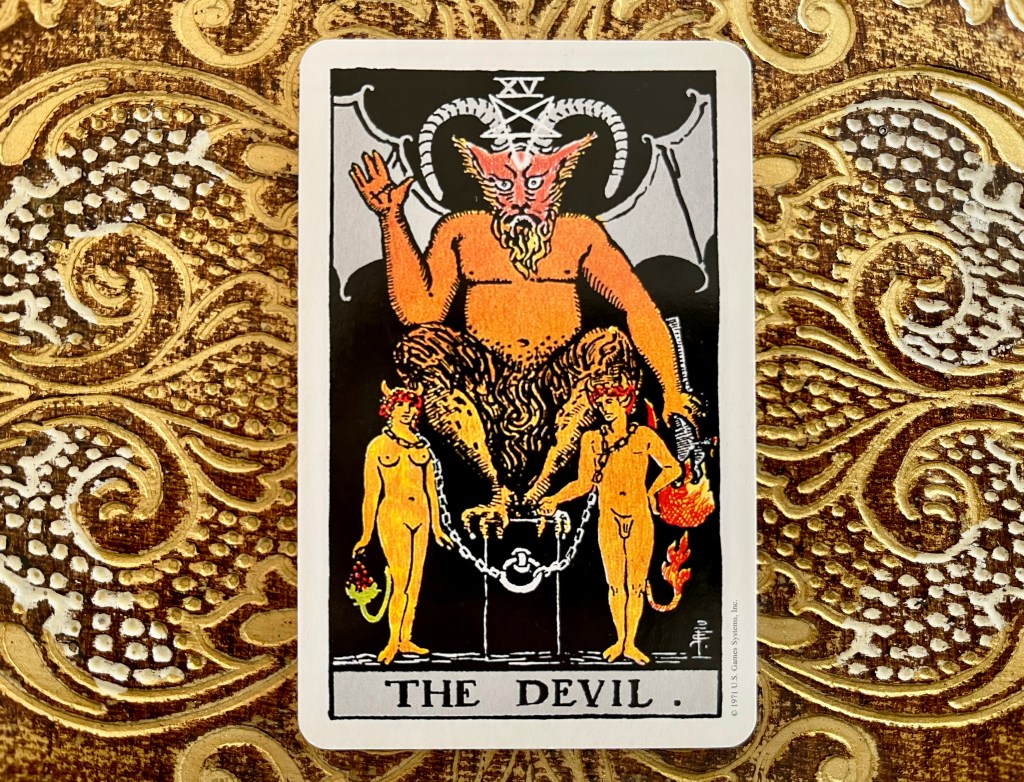
Sul trono, al centro della carta, appare il signore della materia, spesso raffigurato come un essere cornuto, con ali di pipistrello e uno sguardo che scruta oltre l’anima. Ai suoi piedi, due figure umane – un uomo e una donna – sono incatenate, ma le catene appaiono larghe, quasi sciolte: nessuno impedisce loro di liberarsi, se solo ne prendessero coscienza.
Il Diavolo è il custode dei nostri istinti più viscerali: il desiderio, l’avidità, il potere, il piacere che diventa ossessione. Ma allo stesso tempo, è anche il simbolo della forza vitale che ci spinge a creare, a rischiare, a vivere con intensità. Come tutte le energie potenti, può distruggere o trasformare, dipende da come impariamo a dominarla. Il suo numero, il XV, nasconde un segreto: 1+5=6, lo stesso degli Amanti. Ma se in quella carta l’unione era libera e sacra, qui la relazione è corrotta, basata su possesso e dipendenza. È lo specchio oscuro dell’amore, che mostra quanto sia sottile la linea tra eros e prigionia.
Nella mitologia, il Diavolo si collega a figure come Pan, dio della natura selvaggia e incontrollata; a Dioniso, che porta l’ebbrezza e la perdita dei limiti; a Ecate, signora delle ombre e degli incroci. È anche Lucifero, il portatore di luce che cade, e Prometeo, il titano che ruba il fuoco agli dei per darlo agli uomini, pagando il prezzo della ribellione. Tutti archetipi che parlano di un potere ambivalente: liberazione e dannazione, rivelazione e inganno.
Sul piano psicologico, il Diavolo rappresenta ciò che ci tiene prigionieri: vizi, abitudini, paure, legami tossici. Ma ci insegna anche che le catene sono autoimposte: spesso non è la realtà a imprigionarci, ma la nostra percezione. È la carta che ci costringe a guardare dentro la nostra ombra, a riconoscere le parti di noi che preferiremmo negare. Non per distruggerle, ma per integrarle.
Quando appare in posizione diritta, il Diavolo segnala la presenza di forze potenti: desiderio, attrazione, tentazioni, situazioni che ci seducono ma rischiano di dominarci. Può indicare un legame passionale e ossessivo, un’energia travolgente che va maneggiata con consapevolezza. Sul piano materiale, parla di potere, di soldi, di ambizioni forti, ma anche del prezzo da pagare per ottenerli.
Quando è rovesciato, l’Arcano mostra la possibilità di liberarsi dalle catene: la presa del Diavolo si indebolisce e l’anima intravede una via d’uscita. Ma può anche segnalare che il legame oscuro è così radicato da diventare ancora più difficile da sciogliere, generando dipendenze più sottili e subdole.
Il Diavolo insegna che non possiamo sfuggire all’ombra: dobbiamo guardarla in faccia, riconoscerla, persino danzarci insieme, se vogliamo trasformarla. Non è il nemico, ma lo specchio delle nostre pulsioni più profonde. La sua presenza ci ricorda che solo accettando la nostra oscurità possiamo davvero conoscere la luce.
The Devil: a deal with ourself
The fifteenth Arcana of the Tarot, The Devil, appears as an enigmatic and ambivalent figure, both terrifying and seductive. He is not absolute evil, as often misunderstood, but the dark face of our psyche: the shadow within us, the passions that consume us, the addictions that keep us bound.
Seated on a throne, at the center of the card, he appears as the lord of matter, often depicted as a horned being with bat-like wings and an unsettling gaze. At his feet, two human figures – a man and a woman – are chained, yet the chains seem loose, almost open: nothing prevents them from breaking free, if only they became aware of their own power.
The Devil is the guardian of our most visceral instincts: desire, greed, power, pleasure turned into obsession. At the same time, he is also the symbol of vital force — that fire which drives us to create, to risk, to live intensely. Like all powerful energies, he can destroy or transform, depending on how we learn to master him. His number, XV, hides a secret: 1+5=6, the same as The Lovers. But if that card spoke of sacred and free union, here the relationship is corrupted, founded on possession and dependency. The Devil is the dark mirror of love, showing how fine the line is between eros and captivity.
In mythology, he connects to figures such as Pan, god of wild and untamed nature; Dionysus, who brings ecstasy and the loss of boundaries; Hecate, mistress of shadows and crossroads. He is also Lucifer, the light-bringer who falls, and Prometheus, the Titan who stole fire from the gods to give it to mankind, paying the price of rebellion. All are archetypes of ambivalent power: liberation and damnation, revelation and deception.
On a psychological level, The Devil represents what keeps us imprisoned: vices, habits, fears, toxic attachments. Yet he also teaches that these chains are often self-imposed: it is not reality that traps us, but our perception of it. He forces us to look at our shadow, to recognize the parts of ourselves we would rather deny. Not to destroy them, but to integrate them.
When upright, The Devil indicates the presence of powerful forces: desire, temptation, attraction, situations that seduce but risk dominating us. It can represent a passionate, obsessive relationship, or overwhelming energy that must be handled with awareness. On the material level, it speaks of power, money, ambition, and the price one must pay for them.
When reversed, the Arcana shows the possibility of release: the Devil’s grip loosens and the soul glimpses a way out. Yet it can also suggest that the bond is so ingrained that it becomes subtler and harder to break, manifesting as hidden or insidious dependencies.
The Devil teaches that we cannot escape the shadow: we must face it, acknowledge it, even dance with it, if we wish to transform it. He is not the enemy, but the mirror of our deepest impulses. His presence reminds us that only by embracing our darkness can we truly know the light.
 Pigiama Magazine ☾