
Il sedicesimo Arcano dei Tarocchi, La Torre, irrompe come un colpo improvviso, un fulmine che squarcia il cielo e abbatte ciò che sembrava eterno. Sulla carta vediamo una torre imponente, colpita da una saetta divina: le pietre crollano, le fiamme si innalzano, figure umane precipitano nel vuoto.
È l’immagine della caduta, della rottura, ma anche della verità che non può più essere ignorata.
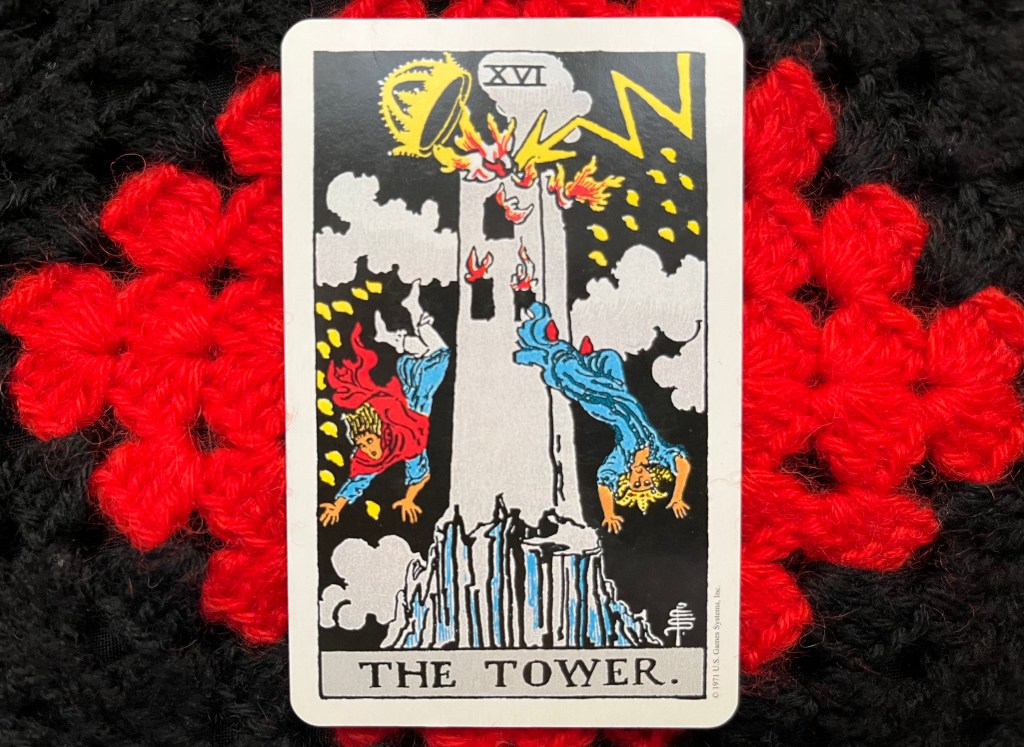
La Torre non è distruzione fine a sé stessa: è rivelazione. È l’abbattimento delle false certezze, degli ego gonfiati, delle strutture costruite sull’orgoglio o sull’illusione. Dove l’orgoglio umano erige mura, il fulmine del destino le abbatte. Il suo numero, il XVI, racchiude questa tensione: 1+6=7, il numero della prova e della ricerca spirituale. La Torre segna un punto di non ritorno, un evento che costringe l’anima a svegliarsi e a ripartire da fondamenta più autentiche.
Gli archetipi legati a questo Arcano sono potenti: la Babele biblica, crollata per l’arroganza dell’uomo; Zeus che abbatte con i fulmini chi sfida il suo ordine; Shiva che distrugge per rinnovare; o ancora la caduta di Atlantide, simbolo di civiltà che non sanno reggere il peso del loro stesso potere.
Ogni mito ci ricorda che nulla di falso può durare per sempre.
Sul piano psicologico, La Torre rappresenta quei momenti della vita in cui tutto sembra crollare: un fallimento, una separazione, una perdita improvvisa. È il terremoto interiore che ci spoglia di ciò che pensavamo indispensabile, rivelandoci che possiamo sopravvivere anche senza. È la frattura che libera dall’inganno, anche se nel momento appare come dolore e caos.
Quando appare diritta in una lettura, La Torre annuncia cambiamenti bruschi, verità che esplodono, eventi che non possono essere evitati. Può sembrare una carta dura, ma porta con sé una promessa: da ciò che cade nascerà qualcosa di più autentico. È l’invito ad accogliere la verità, anche quando distrugge le nostre illusioni.
Quando è rovesciata, La Torre può indicare resistenza al cambiamento: ci si aggrappa a strutture che ormai non reggono più. Oppure segnala cadute meno spettacolari ma più interiori: crisi silenziose, paure represse, terremoti nascosti che però logorano lentamente.
La Torre insegna che nessuna prigione costruita dall’ego è eterna. Le mura cadono, i fulmini arrivano, e ciò che resta è il terreno nudo su cui ricostruire. È il lampo che squarcia la notte: terribile, ma anche luminoso. Solo dopo la caduta si scopre la libertà.
The Tower: nothing false last forever
The sixteenth Arcana of the Tarot, The Tower, bursts forth like a sudden strike, a lightning bolt splitting the sky and toppling what once seemed eternal. On the card we see a towering structure struck by divine fire: stones fall, flames rise, and human figures are cast into the void. It is the image of collapse, of rupture, but also of truth revealed — a truth that can no longer be denied.
The Tower is not destruction for its own sake: it is revelation. It breaks down false certainties, inflated egos, structures built on pride or illusion. Where human arrogance raises walls, the lightning of destiny tears them down. Its number, XVI, reveals this tension: 1+6=7, the number of trials and spiritual searching. The Tower marks a point of no return, an event that forces the soul to awaken and to rebuild upon truer foundations.
The archetypes tied to this card are powerful: the biblical Babel, collapsing under human arrogance; Zeus hurling thunderbolts at those who defy his order; Shiva, destroying to renew; or the fall of Atlantis, symbol of civilizations that collapse under their own weight. Each myth reminds us that nothing false endures forever.
On a psychological level, The Tower represents those moments in life when everything seems to crumble: a failure, a separation, a sudden loss. It is the inner earthquake that strips us of what we thought essential, revealing that we can still survive without it. It is the fracture that frees us from deception, even if it first feels like pain and chaos.
When upright, The Tower announces abrupt changes, explosive truths, events that cannot be avoided. It may seem harsh, but it carries a promise: from what falls, something truer will arise. It is an invitation to embrace truth, even when it destroys our illusions.
When reversed, The Tower can indicate resistance to change: clinging to structures that can no longer stand. Or it may point to quieter, more inward collapses — silent crises, repressed fears, hidden earthquakes that slowly erode.
The Tower teaches that no prison built by the ego lasts forever. Walls fall, lightning strikes, and what remains is the bare ground on which to rebuild. It is the flash that splits the night: terrifying, yet luminous. Only after the fall can freedom be found.
ARTICLE & TRANSLATION
ANTONELLA BUTTAZZO
@antonella_buttazzo
 Pigiama Magazine ☾
1 Comment