
Cosa accade quando le nostre certezze si deformano, poco a poco, fino a diventare qualcosa di estraneo?
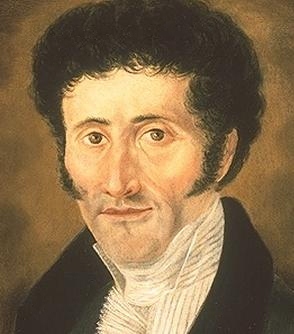
E. T. A. Hoffmann, pseudonimo di Ernst Theodor Amadeus Hoffmann (1776-1822), sovverte la prospettiva della realtà per abbracciare l’assurdo e mettere in scena una recita grottesca, in cui incubi e deliri si agitano in una dimensione che collassa su se stessa.
La sua carriera letteraria inizia come critico musicale. Amava così tanto la musica da decidere di cambiare il suo terzo nome, Wilhelm, in “Amadeus”, in onore di Mozart. Ma Hoffmann è molto più di uno scrittore: è un musicista, un compositore e un disegnatore. Un artista poliedrico, un’anima romantica intrappolata nelle maglie della burocrazia prussiana. La sua stessa esistenza era una dicotomia: di giorno, rigido giurista ligio alle pratiche amministrative; al calar della sera, genio tormentato.
La creatività artistica, per Hoffmann, è uno strumento per scardinare i limiti del corpo e della fisica. Come egli stesso scrive: «rivela all’uomo un regno sconosciuto, (…) in cui ci lasciamo alle spalle tutti i sentimenti concettuali predeterminati per arrenderci all’inesprimibile». Ogni sua storia supera i confini della società grazie al potere dell’immaginazione.
La meccanica dell’anima
Il successo letterario giunge con i racconti di Fantasiestücke in Callots Manier, un calderone alchemico in cui convergono diversi generi, come il fiabesco, il comico, il grottesco, l’avventuroso e l’horror. Tuttavia, l’attrazione fatale per i fenomeni occulti ed allucinatori lo porta ad affrontare i temi dello sdoppiamento della coscienza, della follia e della telepatia, anticipando di decenni le intuizioni della psicoanalisi.
Questa discesa nelle tenebre prosegue districandosi tra sogno e inconscio, esplorando gli anfratti più bui e sinistri della psiche umana. Tra i Racconti Notturni, Der Sandmann si erge a monumento del terrore esistenziale. È il racconto vibrante di un’ossessione paranoica, che oscilla tra il reale e l’immaginario, dove la paura della cecità diventa metafora della perdita dell’Io.
Inquietante ai nostri occhi postmoderni è anche l’intuizione per un orrore che oggi conosciamo fin troppo bene: quella vertigine sottile che ci assale di fronte ad una simulazione quasi perfetta della vita, ma priva di respiro. Nei suoi scritti, gli automi non sono semplici giocattoli ingegnosi, ma specchi vuoti che riflettono la nostra presunzione. Non temeva i mostri sotto il letto, ma le macchine che ci somigliano troppo. E come dargli torto?
Lo scrittore è celebre anche per le reinterpretazioni postume delle sue opere, spesso edulcorate. La fiaba dello Schiaccianoci, oggi associata al Natale e al balletto, nasce dalla penna dell’autore come un cupo e complesso delirio, un intreccio tra l’ordinario e il perturbante. Le sue fiabe macabre squarciano il velo del mondo invisibile per introdurre un disordine morale nella blanda esistenza di annoiati sognatori ad occhi aperti.
Le sue storie, con il loro bizzarro senso di vertigine, scandalizzarono i contemporanei e limitarono il suo successo professionale. La sua vita terrena si conclude in modo tristemente coerente con le atmosfere dei suoi racconti: una satira pungente offese importanti funzionari prussiani che lo trascinarono in tribunale per diffamazione, proprio mentre la malattia lo consumava. I suoi ultimi giorni si trasformano così in un finale grottesco, quasi come se fosse lui stesso un personaggio delle sue storie.
Oggi, leggere Hoffmann, significa recuperare la mappa che collega la noiosa realtà alla follia del sogno. Non serve cercare mostri in luoghi lontani, basta osservare l’angolo buio del proprio salotto. Lì, dove la realtà si sfilaccia, E.T.A. Hoffmann ci aspetta, con un sorriso sghembo e una storia terribile da raccontare.
THE WEIRDO // E.T.A. Hoffmann
What happens when our certainties distort, little by little, until they become something foreign?
E. T. A. Hoffmann, pseudonym of Ernst Theodor Amadeus Hoffmann (1776-1822), subverts the perspective of reality to embrace the absurd and stage a grotesque performance, where nightmares and delusions churn in a dimension collapsing upon itself.
His literary career began as a music critic. He loved music so much that he decided to change his third name, Wilhelm, to “Amadeus,” in honor of Mozart. But Hoffmann is much more than a writer: he is a musician, a composer, and a draftsman. A multifaceted artist, a romantic soul trapped in the meshes of the Prussian bureaucracy. His very existence was a dichotomy: by day, a rigid jurist devoted to administrative duties; at nightfall, a tormented genius.
Artistic creativity, for Hoffmann, is a tool to dismantle the limits of the body and physics. As he himself writes: «it reveals to man an unknown realm, (…) in which we leave behind all predetermined conceptual feelings to surrender ourselves to the inexpressible». Each of his stories transcends the boundaries of society through the power of imagination.
The mechanics of the soul
Literary success came with the tales of Fantasiestücke in Callots Manier, an alchemical cauldron where different genres converge, such as the fairytale, the comic, the grotesque, the adventurous, and horror.
However, a fatal attraction to occult and hallucinatory phenomena led him to address themes of the doubling of consciousness, madness, and telepathy, anticipating the insights of psychoanalysis by decades.
This descent into darkness continues by untangling itself between dream and the unconscious, exploring the darkest and most sinister recesses of the human psyche. Among the Night Pieces, Der Sandmann stands as a monument to existential terror. It is the vibrant tale of a paranoic obsession, oscillating between the real and the imaginary, where the fear of blindness becomes a metaphor for the loss of the Self.
Disturbing to our postmodern eyes is also the intuition of a horror we know all too well today: that subtle vertigo that assails us when faced with an almost perfect simulation of life, yet devoid of breath. In his writings, automata are not simple ingenious toys, but empty mirrors reflecting our own presumption. He did not fear the monsters under the bed, but the machines that resemble us too closely. And who could blame him?
The writer is also famous for the posthumous reinterpretations of his works, which were often sugarcoated. The fairytale of the Nutcracker, today associated with Christmas and the ballet, was born from the author’s pen as a dark and complex delirium, an intertwining of the ordinary and the uncanny. His macabre fairytales tear the veil of the invisible world to introduce a moral disorder into the bland existence of bored day-dreamers.
His stories, with their bizarre sense of vertigo, scandalized his contemporaries and limited his professional success. His earthly life concluded in a way sadly consistent with the atmospheres of his tales: a stinging satire offended important Prussian officials who dragged him to court for defamation, just as illness was consuming him. His final days thus transformed into a grotesque finale, almost as if he were a character from his own stories.
Today, reading Hoffmann means recovering the map that connects tedious reality to the madness of the dream. There is no need to look for monsters in far-off places; it is enough to observe the dark corner of one’s own living room. There, where reality unravels, E.T.A. Hoffmann awaits us, with a crooked smile and a terrible story to tell.
ARTICLE AND TRANSLATION
MARGHERITA SCATTOLIN
@mmaaarghe
 Pigiama Magazine ☾