
I went to the woods because I wished to live deliberately, to front only the essential facts of life.
Henry David Thoreau
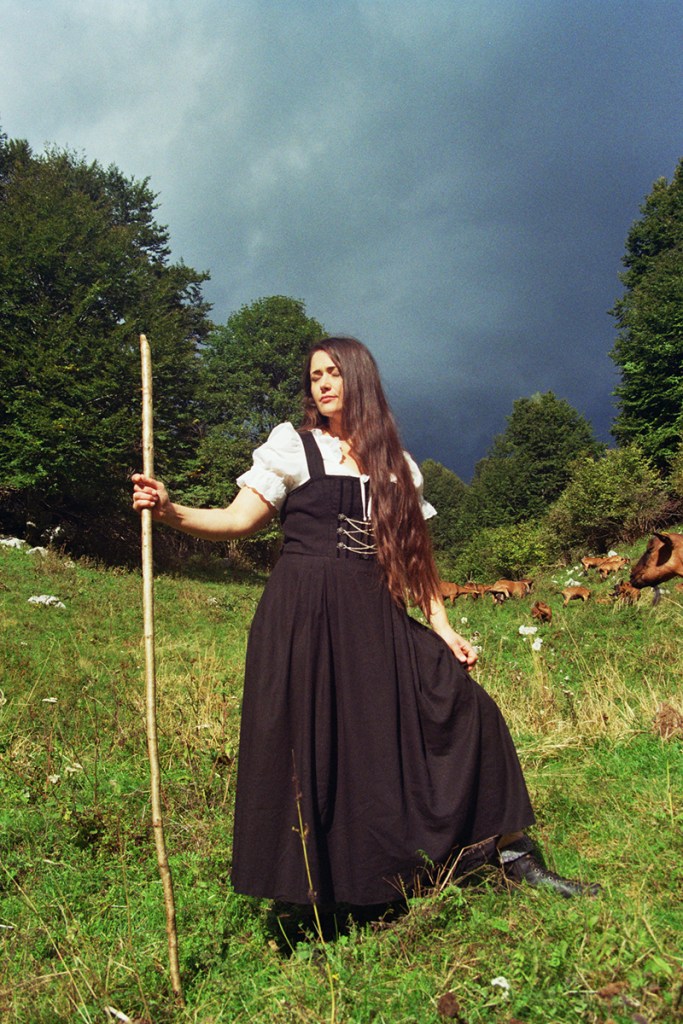
Heidi arrived at the Malga with a machete and a basket of mixed mushrooms, and by mixed, I mean all colours. “Here they are,” she said, “I found them up there,” pointing to the west side of the valley from where she had just come down, accompanied by her goats. We greeted each other and she invited me into the pretty little stone house where she had been working for over a year now. She slipped the knife sheath off her shoulder and hung it in the doorway, then walked over to the table where I had stopped, to spill the contents of the wicker basket on it: a cascade of plump mushrooms, earth and moss, rolled discomposedly over the dark wood, bouncing softly and fragrantly. “What do you say, then we’ll have a risotto?” I didn’t even have time to express my bewilderment that I already saw her pull out from the crumpled, sooty cupboard that covered the entire one wall, a book on mushroom recognition: a pocket-sized vocabulary of woodland mycetes, with photographs and detailed illustrations.
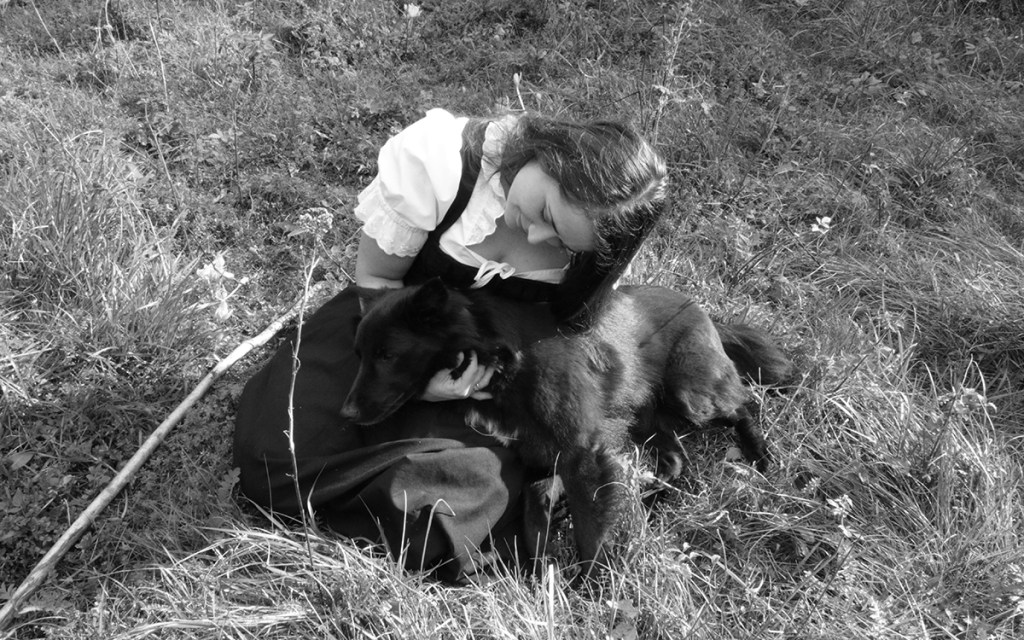
As she approached the table again, her fingers and nose threaded through yellowish pages, I noticed a large purple velvet mushroom in the pile and asked her if she had ever seen it before: “yes, this is beautiful! It is called Cortinarius Violaceus. You can eat it, although the taste is not great.” I had never seen mushrooms of such an attractive colour, and their chubby purple appearance did not stimulate my appetite at all. He asked me if I was hungry, but I felt like going for a walk out there. A bit like Fog who could no longer contain all his Border Collie hyperactivity and, when Heidi announced, “OK, let’s go!”, she sprinted towards the herd to announce the departure for the afternoon grazing tour.

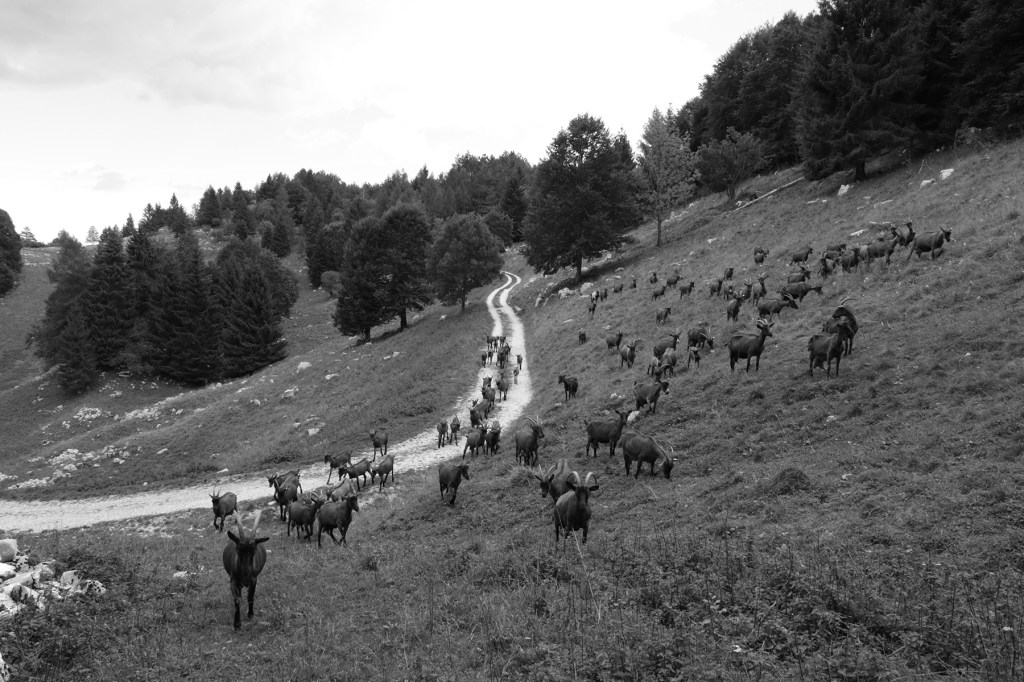
The sun illuminated the entire valley in front of the malga, a green cliff into which one felt like jumping. Some goats led the group, others followed close behind, as if they felt more reassured by our human presence. Goats are intelligent and sensitive animals and, as Heidi says, “you just have to learn their language.” Every now and then they quarrel with each other, rattle violently and then, as if nothing had happened, start nibbling leaves off branches again. They are direct, impulsive and stubborn animals from whom we have much to learn.
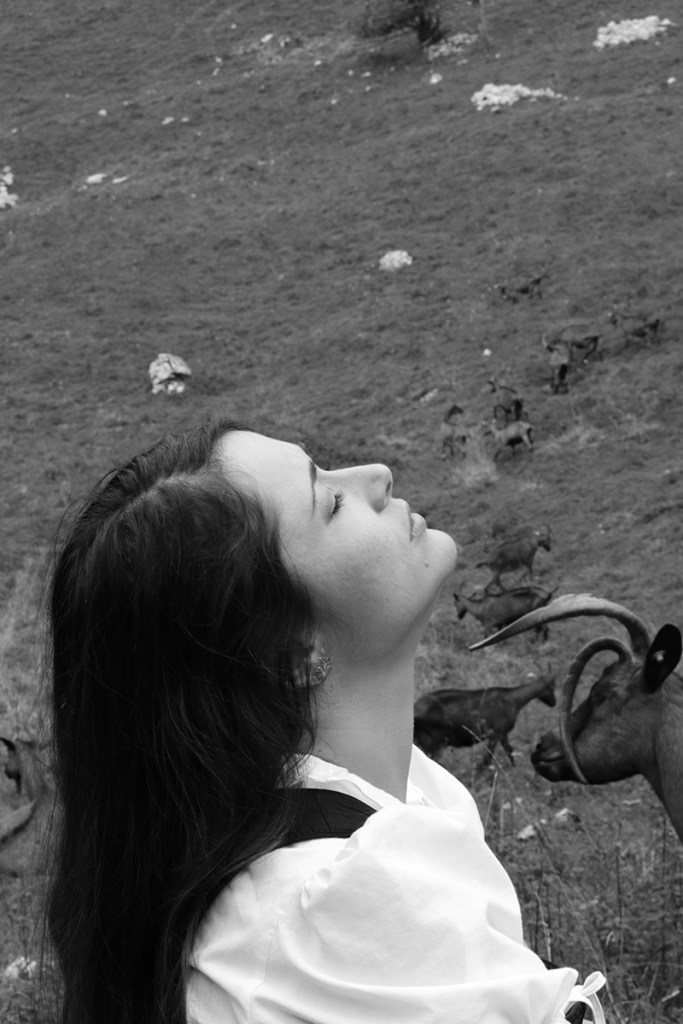
Climbing uphill, among rocks and wild grasses, surrounded by animals, I could smell the scent of freedom, felt my thoughts clearer and my worries could not disturb me at all. We decided to stop in a wide valley to take a break. Heidi lit a cigarette and, looking absorbedly at her flock, told me that she did not miss her old life in the city at all: “I used to work in a bar, but humans are unbearable. I used to sing in a punk band, but in the end this is the most punk thing I’ve ever done, in every way. I heard nature’s cry for help and had to escape to this mountain, where I realized that only our roots can heal us. If people knew how much effort it takes to make a piece of good cheese, maybe they would stop worrying about so many unnecessary things. I’m not just talking about waking up early to milk or taking the herd out to pasture for hours, I’m also talking about the sacrifice of the kids at the beginning of spring; I can’t tell you how much I cried when the butcher arrived to pick them up, and believe me, loading those little creatures onto the truck after they’ve been born breaks your heart, but it does, otherwise there would be no hope for small rural farms like this one. The forest gives you gifts every day, I always come home with mushrooms or herbs to cook and it’s a wonderful feeling. The milk smells like the wild plants you see around here and everything makes sense”.
Un giorno con Heidi
Andai nei boschi perché desideravo vivere con saggezza, per affrontare solo i fatti essenziali della vita.
Henry David Thoreau
Heidi arrivò alla malga con un machete e un cestino di funghi misti e, per misti, intendo di tutti i colori. “Ecco qua”, disse, “li ho trovati lassù”, indicando il versante ovest della valle da dove era appena scesa, accompagnata dalle sue capre. Ci salutammo e mi invitò ad entrare in quella graziosa casetta di sasso dove lavorava ormai da più di un anno. Si sfilò il fodero con il coltellaccio dalla spalla e lo appese all’ingresso, poi si avvicinò al tavolo dove mi ero fermata per rovesciarci sopra il contenuto del cestino di vimini: una cascata di funghi paffutelli, terra e muschio, rotolarono scomposti sul legno scuro, rimbalzando morbidi e profumati. “Che dici, poi ci facciamo un risotto?” Non feci nemmeno in tempo ad esprimere il mio sconcerto che già la vidi estrarre dalla credenza accartocciata e fuligginosa che copriva l’intera una parete, un libro sul riconoscimento dei funghi: un vocabolario tascabile di miceti boschivi, con fotografie e illustrazioni dettagliate.
Mentre si avvicinava di nuovo al tavolo, con le dita e il naso infilati tra pagine giallognole, notai, nel mucchio, un grosso fungo di velluto viola e le chiesi se lo avesse mai visto prima: “si, questo è bellissimo! Si chiama Cortinarius Violaceus. Si può mangiare, anche se il sapore non è un granché.” Non avevo mai visto dei funghi di un colore così attraente, e quel loro aspetto violaceo non mi stimolava affatto l’appetito. Mi chiese se avessi fame, ma avevo voglia di andare a fare un giro là fuori. Un po’ come Nebbia che non riusciva più a contenere tutta la sua iperattività da Border Collie e, quando Heidi annunciò: “Ok, andiamo!”, scattò verso il gregge per annunciare la partenza per il giro di pascolo pomeridiano.
Il sole illuminava tutta la vallata di fronte alla malga, uno strapiombo verde in cui veniva voglia di lanciarsi. Alcune capre guidavano il gruppo, altre ci seguivano da vicino, come se si sentissero più rassicurate dalla nostra presenza umana. Le capre sono animali intelligenti e sensibili e, come dice Heidi, “bisogna solo imparare il loro linguaggio”. Ogni tanto litigano tra di loro, si scornano violentemente e poi, come se nulla fosse, ricominciano a mangiucchiare foglie da qualche ramo. Sono animali diretti, impulsivi e testardi da cui abbiamo molto da imparare.
Scarpinando in salita, tra rocce ed erbe selvatiche, circondata da animali, riuscivo a sentire il profumo della libertà, i miei pensieri erano più nitidi e le mie preoccupazioni non riuscivano minimamente a disturbarmi. Decidemmo di fermarci in un’ampia vallata per fare una pausa. Heidi si accese una sigaretta e, guardando assorta il suo gregge, mi disse che la sua vecchia vita in città non le mancava affatto: “Prima lavoravo in un bar, ma gli esseri umani sono insopportabili. Cantavo in una band punk, ma alla fine questa è la cosa più punk che io abbia mai fatto, sotto ogni aspetto. Ho sentito il grido d’aiuto della Natura e sono dovuta scappare su questa montagna, dove ho capito che le solo le nostre radici possono guarirci. Se la gente sapesse quanta fatica ci vuole per fare un pezzo di formaggio, forse la smetterebbe di preoccuparsi per tante cose inutili. Non parlo solo di svegliarsi presto per mungere o di portare il gregge al pascolo per ore, parlo anche del sacrificio dei capretti all’inizio della primavera; non ti dico quanto ho pianto quando il macellaio è arrivato a prenderli e credimi, caricare quelle piccole creature sul camion dopo averle fatte nascere ti spezza il cuore, però è così, altrimenti non ci sarebbe speranza per i piccoli allevamenti rurali come questo. Il bosco ti fa dei regali ogni giorno, torno sempre a casa con funghi o erbe da cucinare ed è una sensazione bellissima. Il latte ha lo stesso odore delle piante selvatiche che vedi qui attorno a noi e ogni cosa ha senso di esistere”.
English Translation by Giorgio Marsulli
 Pigiama Magazine ☾