
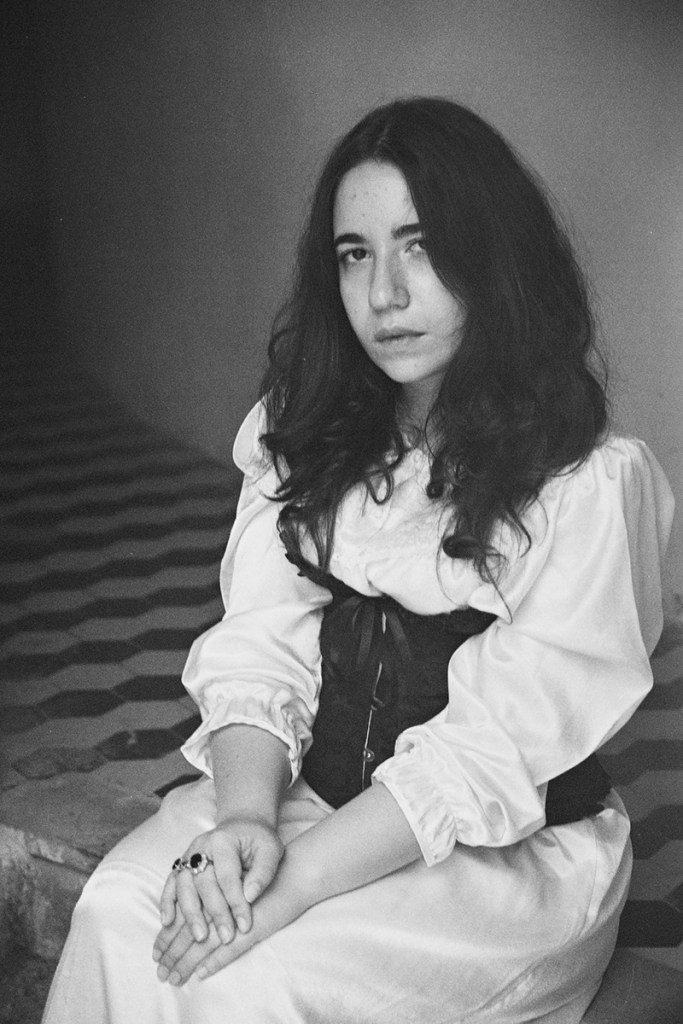
Daria is a multifaceted queer non-binary artist. They grew up immersed in the Florentine artistic environment, which prompted them to study painting. During the schooling years they developed a passion for cultures of Asia, and decided to move to Venice to study Japanese Language and Culture at Ca’ Foscari University. This led them to move to Tokyo, where they currently work as an art teacher“.
At present, they are devoting themself to artistic experimentation and to listening to their inner self, as they believe they need to be curious and self-aware in order to create art that can be unconditionally their own. Art and sensitivity are two aspects that deeply characterize them, so much that they declared “My creativity and particular sensitivity are the foundations of my identity”. Their most recent productions are Oneiric and angry art and “The artificial lake of memories”, which you can find on instagram at @guroi_guroi.

What does art mean to you?
It is necessity and instinct. Making art has always been my most intimate and spontaneous way of telling what I perceive inside and outside of me. My artistic sensibility is a tool that sheds light on the unspoken, the intangible and the invisible. Through my artistic production I try to concretize the dynamic dialogue between the outer and inner worlds, to narrate and normalize both the softness and dirtiness of human nature.
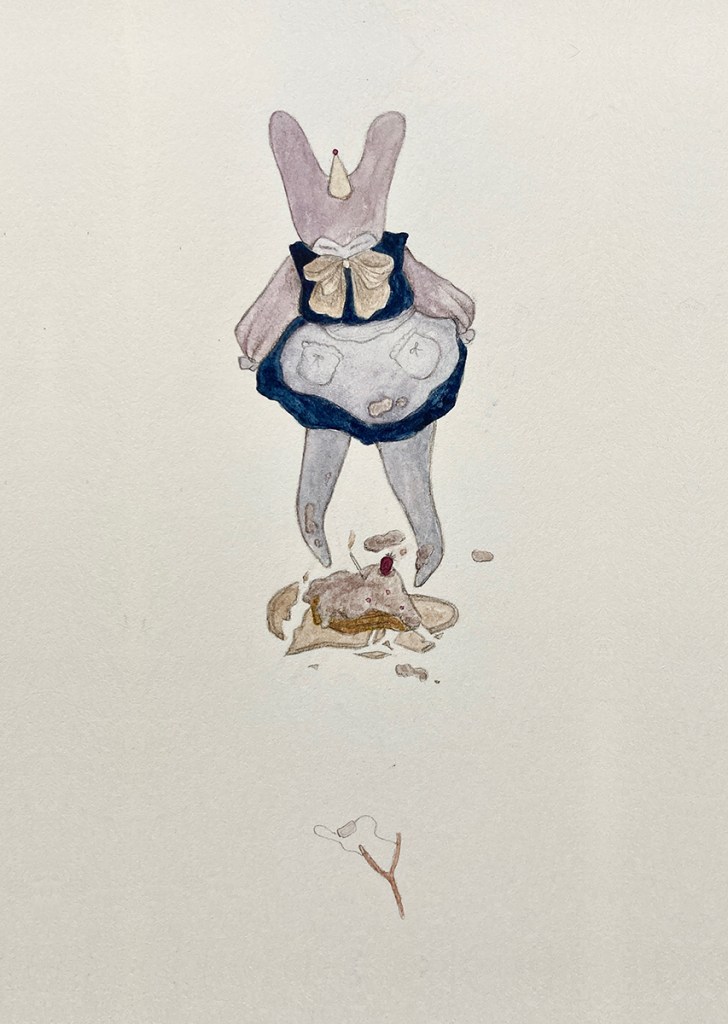
I am an insecure person, but thanks to art I can expand, make noise, reclaim my space without apologizing or asking for permission. When I draw I often travel on several interconnected planes (oneiric, spiritual, emotional, sensorial, psychological). Sometimes I represent my insecurities and my emotions, other times I perceive mysterious sides of my unconscious and psyche, I amplify the senses and expand my mind in new ways.
Lately I’m sensing something gestating within me, and I feel that it will soon come out. When it happens, I will be able to connect more with my most authentic and deepest self, to get rid of the noise and external influences, to know myself better. I want to manifest all of this with my art, in my art.
What is the most significant piece of your dream symbology?
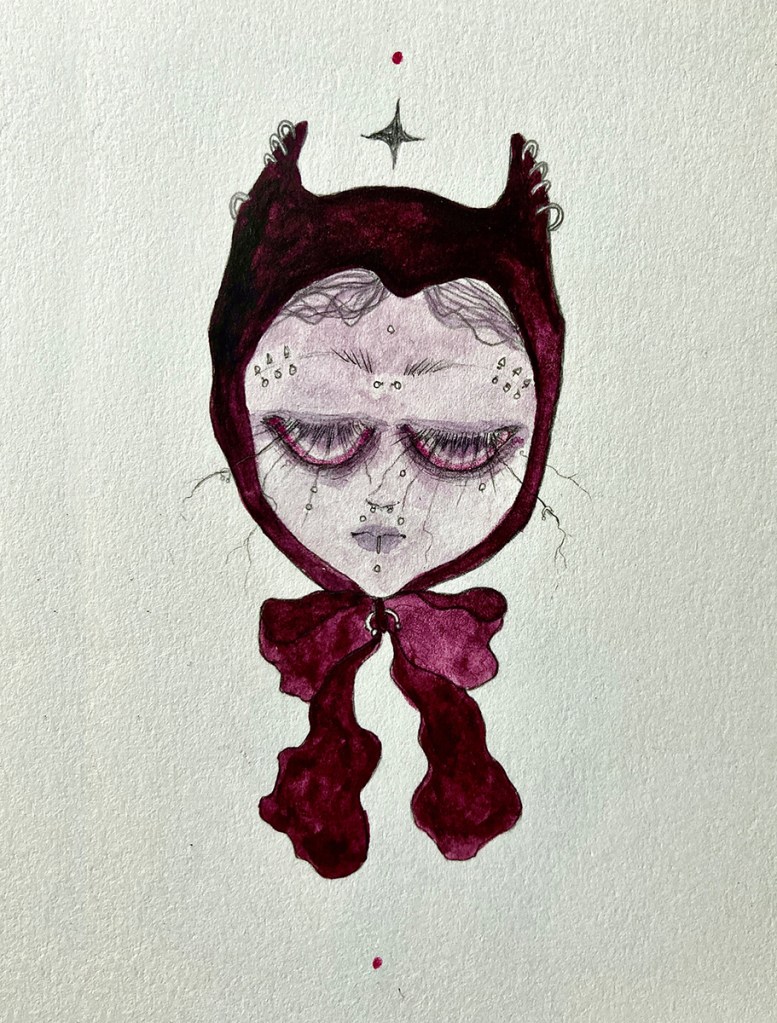
Each symbol I collect is equally important, so there is no symbol that is more significant than the other. At the moment I have collected only a few. I am learning very slowly to travel my dreams with awareness and kindness, letting the symbols manifest themselves spontaneously. I have identified and collected some of the symbols that have emerged so far, but I have not yet interpreted their deeper meaning.
The symbol that I feel I have understood the most is definitely the flower of anxiety. It is a brown daffodil with a vivid green stem sprouting from the stomach and that develops vertically to the chest, to which the flower’s paracorollae is attached firmly, like a suction cup.
How did you passion for Japan start?
I have been fascinated by foreign cultures from a very young age, especially those that I perceived as magical and mysterious. As a child, I was obsessed with Egypt, but in the meantime I was already unknowingly hatching my passion for Japan through the cartoons I used to watch on TV.
When I was 11 I bought my first manga, and I still remember the awe and wonder I felt at that volume, so different from the classic Euro-American comics I was used to. The format, the smell and the quality of the paper, the style of the drawings, the right-to-left reading… it was a true epiphany, so much that I begged my parents to buy that manga, which to this day I still treasure like a relic.
My other point of contact with Japan was books, first and foremost the novels of Banana Yoshimoto. As I grew up, I delved more consciously into my passion, at first only in relation to pop culture, but then becoming more and more interested in food, fashion, traditions and, finally, language. All of this definitely has had a huge impact on my person and my art.
Which of the five senses do you cherish the most?
Since I practice Mindfulness, I value all five senses, as I also believe in the existence of additional latent and arcane senses. If I had to choose just one, I would say smell, to me the most mysterious and fascinating of them all. The perception of smells in itself is extremely subjective and variable, and this exactly allows us to travel to different places and different times.
The power of olfactory memory is extraordinary, and I often find myself led to distant memories and remote places by smells. For me, the smell of complimentary coffee they offer on long-distance trains in Italy is extremely evocative: it takes me back to the days when I lived in Kyoto and I used to drink poor-quality instant coffee to save money.

I also like to focus on smells to stay in the “here and now”, and use scents for aromatherapy. I love wearing different perfumes according to my mood, and I often ask other people to smell them to ask “what does this smell remind you of?”. My sense of smell connects me with others, and allows me to share worlds and feelings.
L’arte “onirica ed arrabbiata” di Daria Fanara // Intervista
Daria è un’artista poliedrica queer non-binary. Cresce a stretto contatto con l’ambiente artistico fiorentino, che la spinge a studiare pittura presso il Liceo Artistico Leon Battista Alberti di Firenze. In quegli anni si appassiona alle culture dell’Asia, e decide di trasferirsi a Venezia per studiare Lingua e Cultura Giapponese all’Università di Ca’ Foscari. Questo l’ha portata a spostarsi a Tokyo, dove attualmente lavora come insegnante di pittura“.
Attualmente si sta dedicando molto alla sperimentazione artistica e all’ascolto del suo io interiore, poiché ritiene di dover essere curiosa e auto-consapevole per creare un’arte incondizionatamente sua. L’arte e la sensibilità sono, infatti, due aspetti che la contraddistinguono profondamente, tanto da dichiarare “Il mio estro creativo e la mia particolare sensibilità sono le fondamenta della mia identità”.
La sue produzioni più recenti sono “Arte onirica e arrabbiata” e “Il lago artificiale dei ricordi”, che potete trovare su Instagram su @guroi_guroi.
Cosa significa “fare arte”?
È necessità e istinto. Da sempre fare arte è il mio modo più intimo e spontaneo di raccontare ciò che percepisco dentro e fuori di me. La mia particolare sensibilità artistica è uno strumento che fa luce sui non-detti, sull’intangibile e sull’invisibile. Tramite la mia produzione artistica cerco di concretizzare il dialogo dinamico tra i mondi esteriori e quelli interiori, di raccontare e normalizzare sia la delicatezza che la sporcizia umana.
Sono una persona insicura, ma grazie all’arte posso espandermi, fare baccano, riappropriarmi del mio spazio senza chiedere scusa o permesso. Quando disegno spesso viaggio su diversi piani interconnessi (onirico, spirituale, emotivo, sensoriale, psicologico). A volte rappresento le mie insicurezze e le mie emozioni, altre volte percepisco lati misteriosi del mio inconscio e della mia psiche, amplifico i sensi ed espando la mente in maniera inedita.
Negli ultimi tempi percepisco qualcosa in gestazione dentro di me, e sento che presto uscirà. Quando accadrà, sarò in grado di connettermi maggiormente col mio io più autentico e profondo, di liberarmi del rumore e delle influenze esterne, di conoscermi meglio. Voglio manifestare tutto questo con la mia arte, nella mia arte.
Qual è il pezzo più significativo della tua simbologia onirica?
Ciascun simbolo che raccolgo è ugualmente importante, perciò non esiste un simbolo più significativo di altri. Al momento ne ho collezionati pochi, perché sto imparando molto lentamente a viaggiare con consapevolezza e gentilezza nei miei stessi sogni, lasciando che siano i simboli stessi a manifestarsi spontaneamente. Alcuni tra i simboli che sono affiorati fino ad ora li ho individuati e raccolti, ma non ne ho ancora decifrato il senso profondo.
Il simbolo che tra tutti ho inquadrato meglio è sicuramente il fiore dell’ansia. Si tratta di un narciso color marrone, con un gambo verde vivido che spunta dallo stomaco e si sviluppa verticalmente fino al petto. Su quest’ultimo, la paracorolla del fiore è attaccata saldamente, come una ventosa.
Com’è nata la tua passione per il Giappone?
Fin da piccolissima mi affascinano le culture straniere, soprattutto quelle che percepivo come magiche e misteriose. Da bambina ero ossessionata dall’Egitto, ma nel frattempo già covavo inconsapevolmente la mia passione per il Giappone tramite i cartoni animati che trasmettevano in televisione.
A undici anni acquistai il mio primo manga, e ricordo ancora lo stupore e la meraviglia che provai di fronte a quel volume così diverso dai classici fumetti euro-americani a cui ero abituata. Il formato, l’odore e la qualità della carta, lo stile dei disegni, il metodo di lettura da destra verso sinistra… Fu una vera epifania, tanto che implorai i miei genitori di acquistare quel manga, che tuttora conservo come una reliquia.
L’altra mia finestra sul Giappone furono i libri, primi tra tutti i romanzi di Banana Yoshimoto. Crescendo ho approfondito con maggiore consapevolezza la mia passione, inizialmente solo in relazione alla cultura pop, poi interessandomi sempre di più al cibo, alla moda, alle tradizioni e, infine, alla lingua. Tutto questo ha sicuramente avuto un enorme impatto sulla mia persona e sulla mia arte.
Il tuo senso prediletto?
Poiché pratico la Mindfulness, do grande valore a tutti e cinque i sensi, e credo anche nell’esistenza di ulteriori sensi latenti e arcani. Se dovessi sceglierne solo uno direi l’olfatto, il più misterioso e affascinante tra tutti. La percezione degli odori di per sé è estremamente soggettiva e variabile, e ciò ci permette di viaggiare in luoghi e momenti diversi. La potenza della memoria olfattiva è strabiliante, e spesso vengo trascinata in ricordi e luoghi remoti grazie agli odori.
Per me, ad esempio, l’odore del caffè che offrono sui treni a lunga percorrenza in Italia è estremamente evocativo: mi riporta ai tempi in cui vivevo a Kyoto, periodo in cui bevevo quotidianamente del caffè istantaneo di scarsa qualità per risparmiare.
Mi piace anche concentrarmi sugli odori per rimanere sul “qui e ora”, e anche usare profumi per l’aromaterapia. Adoro indossare profumi diversi in base al mio umore, e spesso li faccio annusare ad altri chiedendo “a cosa ti fa pensare quest’odore?”. Così l’olfatto mi connette col prossimo, mi permette di condividere mondi e sensazioni.
Daria Fanara
Youtube: Cambio D'Aria
IG: @nooliedudu
 Pigiama Magazine ☾