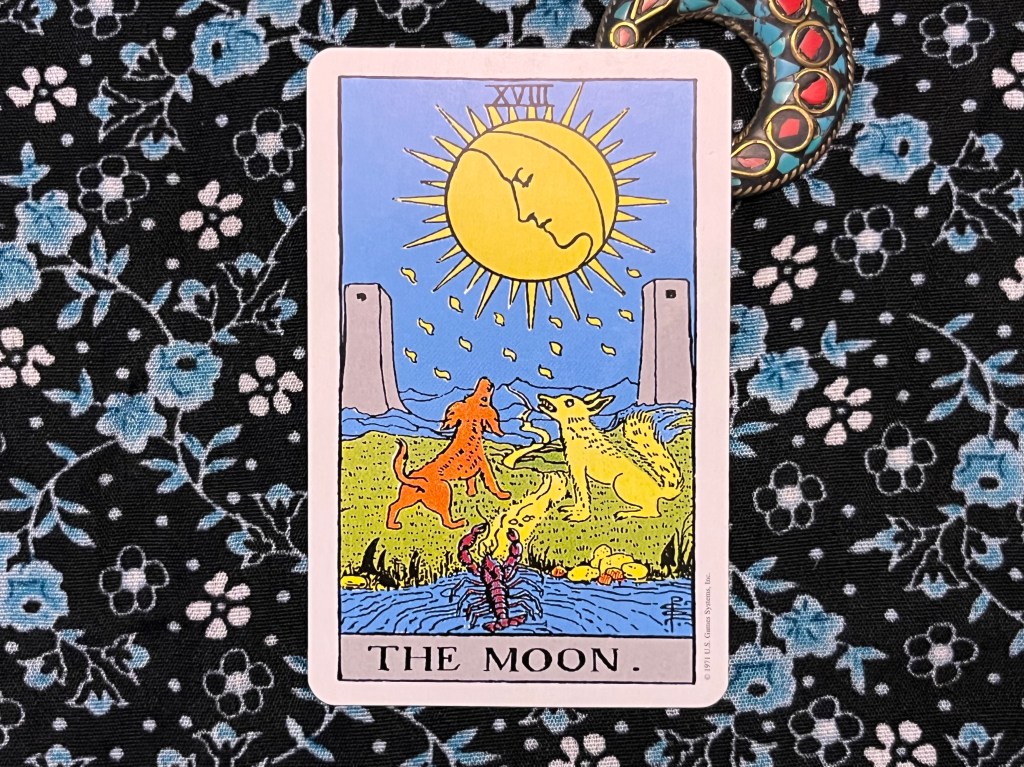
Il diciottesimo Arcano, La Luna, è la soglia del mistero.
La scena è immersa in una luce argentea e irreale: una luna piena domina il cielo, riflettendosi in un’acqua profonda; due torri gemelle si ergono ai lati di un sentiero che scompare all’orizzonte; un cane e un lupo ululano alla luna, e dal lago emerge un crostaceo, simbolo di ciò che sale dal profondo dell’inconscio.
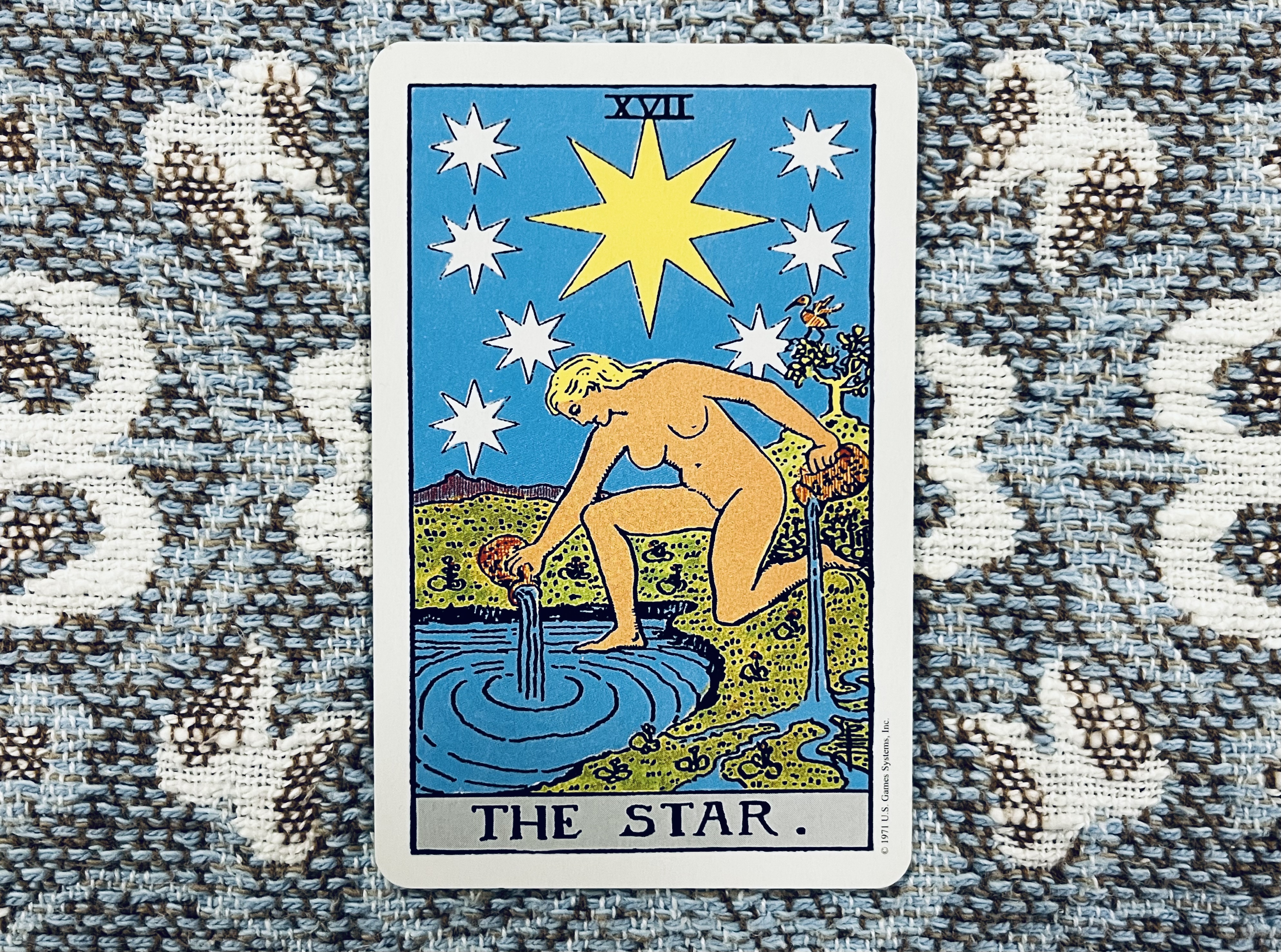
Dopo la chiarezza celeste de La Stella (XVII), tutto è ambiguità, illusione, sogno.
La Luna ci riporta nel regno delle ombre, dove la luce è indiretta, dove nulla è come sembra.
È la notte dell’anima, quella che precede l’alba della rivelazione. La Luna è il dominio dell’inconscio, dei ricordi sepolti, delle emozioni che non si lasciano dominare. È l’acqua che muta forma, la psiche che si riflette e si confonde, la voce delle intuizioni che parlano senza parole. Il suo numero, XVIII (1+8=9), ci conduce al compimento di un ciclo interiore: prima della rinascita del Sole (XIX), l’anima deve attraversare il labirinto dei propri specchi.
Nelle antiche tradizioni, la Luna è madre e dea, regina delle maree e dei sogni: Selene che attraversa il cielo in un carro d’argento; Artemide, custode della notte e dei misteri femminili; Ecate, signora dei crocicchi, che guida i viandanti nei passaggi più oscuri. È anche Iside, che cerca i frammenti di Osiride nell’ombra, e Lilith, la parte selvaggia e non domata della coscienza.
Sul piano psicologico, La Luna rappresenta la profondità dell’inconscio, le illusioni, ma anche l’intuizione e la creatività che nascono dal sogno. È la carta della sensibilità estrema, della percezione sottile, ma anche dei timori e delle proiezioni che deformano la realtà. In amore, può segnalare rapporti ambigui, magnetici ma non del tutto chiari; nel lavoro, può indicare confusione o ispirazione visionaria; nella spiritualità, è il cammino interiore attraverso i simboli e i sogni.
Quando appare diritta, La Luna invita all’ascolto interiore: è il tempo di fidarsi dell’intuizione, di accogliere i messaggi dei sogni, di lasciarsi guidare dal silenzio. Non è il momento della razionalità, ma della percezione profonda. Quando invece appare rovesciata, può segnalare inganno, autoillusione, smarrimento. È la luce deformata della mente che proietta paure e fantasmi dove non ci sono.
La Luna ci insegna che la verità non sempre abita nella chiarezza: a volte si rivela solo nella penombra, tra riflessi e intuizioni. È la carta della visione interiore, quella che nasce dal buio e prepara l’alba. Dopo la notte lunare, infatti, sorge il Sole (XIX) — la consapevolezza limpida che segue il sogno.
La Luna è il respiro dell’anima quando tace il mondo, la voce che ci parla nel linguaggio delle maree interiori.
Guardarla è ricordare che anche nel buio, la luce non scompare mai: semplicemente, cambia forma.
The Moon: nothing is as it seems
The eighteenth Arcana, The Moon, is the threshold of mystery. The scene is bathed in a silvery, unreal light: a full moon dominates the sky, reflected in dark water; two twin towers rise on either side of a path fading into the horizon; a dog and a wolf howl at the moon, while a crustacean crawls from the lake, a creature born from the depths of the unconscious.
Everything here is ambiguity, illusion, dream. After the celestial clarity of The Star (XVII), The Moon draws us back into the realm of shadows, where light is indirect and nothing is as it seems. It is the night of the soul, the passage that precedes the dawn of revelation.
The Moon rules the unconscious, the buried memories, the emotions that defy control. It is the water that changes form, the psyche that reflects and dissolves itself, the voice of intuition that speaks without words. Its number, XVIII (1+8=9), marks the completion of an inner cycle: before the rebirth of The Sun (XIX), the soul must wander through the labyrinth of its own reflections.
In ancient traditions, the Moon is mother and goddess, queen of tides and dreams: Selene driving her silver chariot across the sky; Artemis, guardian of the night and of feminine mysteries; Hecate, mistress of crossroads, guiding travelers through the dark. She is also Isis, seeking the scattered pieces of Osiris, and Lilith, the untamed force of consciousness.
Psychologically, The Moon represents the depth of the unconscious, illusion, but also intuition and creativity born of dreaming. It is the card of heightened sensitivity and subtle perception, but also of confusion and projection. In love, it can suggest magnetic yet unclear relationships; in work, inspiration or delusion; in spirituality, the inner journey through symbols and visions.
When upright, The Moon invites inner listening: a time to trust intuition, to heed the messages of dreams, to let silence be your compass. It is not the time for logic, but for deeper perception. When reversed, it may signal deception, self-delusion, or emotional disorientation, the warped light of the mind projecting fear where none exists.
The Moon teaches that truth is not always found in clarity; sometimes it reveals itself only in twilight, between reflections and insights. It is the card of inner vision, born from darkness and leading toward the dawn.
The Moon is the breath of the soul when the world is silent, the voice that rises in the tides within.
To gaze upon it is to remember: even in the dark, the light never disappears. It merely changes its form.
ARTICLE & TRANSLATION
ANTONELLA BUTTAZZO
@antonella_buttazzo
 Pigiama Magazine ☾